
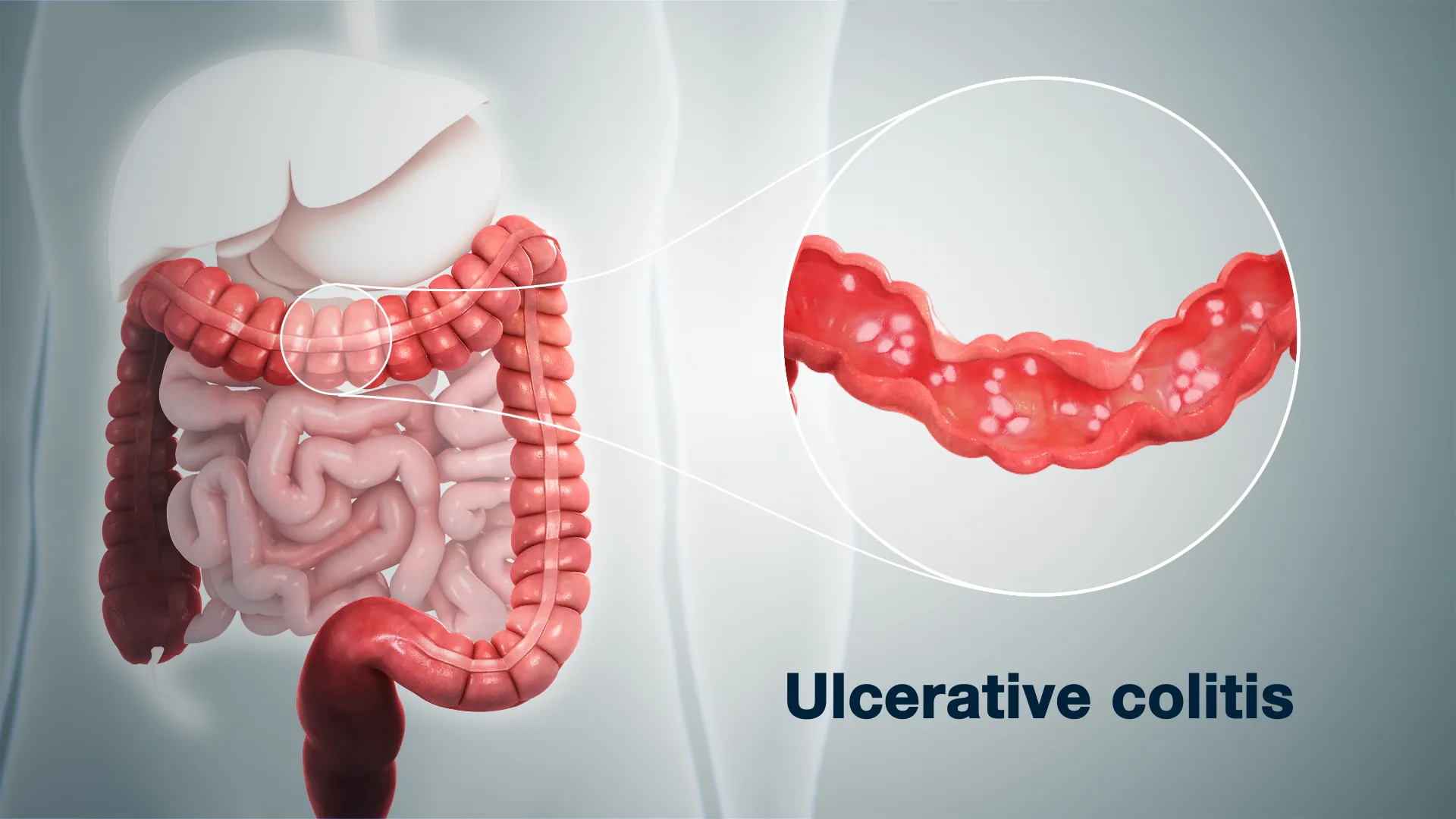
Understanding Ulcerative Colitis
Inflammatory bowel disease (IBD) is a challenging condition affecting the digestive tract. Ulcerative colitis specifically targets the large intestine, causing inflammation and ulcers.
Key Symptoms:
- Diarrhea with blood or pus
- Rectal bleeding
- Abdominal pain and cramping
- Rectal pain
- Urgency to defecate
- Weight loss
- Fatigue
- Fever
- Inability to defecate despite urgency
1. Ulcerative Proctitis: Inflammation near the anus, often with rectal bleeding.
2. Proctosigmoiditis: Involves the rectum and sigmoid colon, causing bloody diarrhea and abdominal pain.
3. Left-sided Colitis: Inflammation extends from the rectum to the left side of the colon.
4. Pancolitis:Affects the entire colon, leading to severe symptoms like bloody diarrhea and significant weight loss.
When to See a Doctor:
Seek medical attention for persistent changes in bowel habits, abdominal pain, blood in stool, or unexplained fever lasting more than a day.
Causes and Risk Factors:
- Cause: Unknown, but immune system malfunction is suspected.
- Risk Factors: Age (usually before 30), race, family history (more common in Ashkenazi Jewish descent).
Complications:
- Severe bleeding
- Dehydration
- Toxic megacolon (swelling of the colon)
- Perforated colon
- Increased blood clot risk
- Inflammation of skin, joints, and eyes
- Higher risk of colon cancer
Management:
While there's no cure, new treatments can reduce symptoms and induce long-term remission.
Take Action:
If you experience persistent symptoms, consult your healthcare provider promptly.
Keywords