The Milligan-Morgan Technique of Hemorrhoidectomy: A Comprehensive Guide for Surgeons
The Milligan-Morgan hemorrhoidectomy is one of the most widely practised surgical techniques for treating symptomatic grade III and IV haemorrhoids. Renowned for its effectiveness in relieving symptoms and preventing recurrence, this open hemorrhoidectomy method involves the excision of hemorrhoidal tissue while preserving the underlying anoderm and sphincter muscles. This article provides a step-by-step guide, highlights critical do’s and don’ts, and discusses the pros and cons of the technique to aid surgeons in optimizing patient outcomes.
Step-by-Step Guide for the Milligan-Morgan Hemorrhoidectomy
1. Preoperative Preparation
- Patient Evaluation: Perform a thorough clinical assessment, including anoscopy or proctoscopy, to confirm the diagnosis and determine the extent of hemorrhoidal disease.
- Anesthesia: General or regional (spinal/epidural) anaesthesia is commonly used to ensure patient comfort.
- Bowel Preparation: Administer an enema or laxative the night before surgery to empty the rectum.
- Positioning: Place the patient in a lithotomy or jackknife position for optimal surgical access.
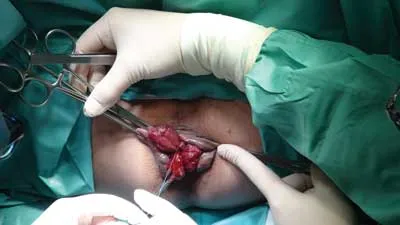
2. Surgical Procedure
- Exposing the Hemorrhoids:
- Insert an anal retractor to visualize the hemorrhoidal tissue.
- Identify the internal and external components of the haemorrhoids.
- Marking and Grasping:
- Use forceps to grasp the hemorrhoidal mass.
- Mark the skin incision with a surgical marker, ensuring it preserves the anoderm and skin bridges.
- Excising Hemorrhoidal Tissue:
- Begin at the apex of the hemorrhoid, making an elliptical incision.
- Dissect the hemorrhoidal tissue carefully, avoiding injury to the sphincter complex.
- Hemostasis:
- Use electrocautery or ligation to control bleeding during tissue excision.
- Ensure meticulous hemostasis to prevent postoperative complications such as hematoma.
- Closure or Open Wound:
- Leave the wound open to heal by secondary intention, as per the traditional Milligan-Morgan approach.
- Alternatively, consider partial closure to enhance patient comfort while maintaining drainage.
- Postoperative Hemostasis:
- Perform a final check for bleeding and insert a hemostatic dressing if required.
3. Postoperative Care
- Prescribe analgesics and laxatives to minimize pain and prevent straining during defecation.
- Advise sitz baths 2-3 times daily to maintain hygiene and promote healing.
- Schedule follow-ups to monitor recovery and identify any complications early.
Do’s and Don’ts for Surgeons
Do’s:
- Thorough Assessment: Confirm the diagnosis and rule out other anorectal pathologies.
- Anatomical Precision: Preserve the anoderm and sphincter complex to prevent complications.
- Meticulous Hemostasis: Ensure complete control of bleeding during and after the procedure.
- Patient Education: Inform patients about the recovery process and the importance of follow-ups.
Don’ts:
- Avoid Overexcision: Excessive tissue removal can lead to anal stenosis.
- Prevent Sphincter Injury: Handle tissues gently to avoid incontinence or other functional impairments.
- Neglect Postoperative Care: Inadequate management can increase the risk of complications like infection or recurrence.
Pros and Cons of the Milligan-Morgan Technique
Pros:
- High Success Rate: Effective in resolving symptoms and reducing recurrence.
- Simplicity: Straightforward procedure with a standardized approach.
- Versatility: Suitable for both internal and external haemorrhoids.
Cons:
- Pain: Postoperative pain is common due to the open wound.
- Prolonged Healing: Healing by secondary intention takes time.
- Risk of Complications: Potential for bleeding, infection, or anal stenosis if not performed meticulously.
Conclusion
The Milligan-Morgan hemorrhoidectomy remains a cornerstone in the surgical management of advanced hemorrhoidal disease. By following the outlined steps, adhering to the dos and don’ts, and understanding the benefits and limitations of the technique, surgeons can achieve optimal patient outcomes. Proper training and attention to detail are critical for minimizing complications and ensuring the success of this time-tested procedure.
Keywords