Rubber Band Ligation (RBL) for Hemorrhoids: A Non-Surgical Solution
Rubber Band Ligation (RBL) is a widely used, minimally invasive procedure designed to treat Grade I, II, and early Grade III hemorrhoids. This technique involves the placement of a small rubber band around the base of the hemorrhoidal tissue, cutting off its blood supply, which causes the hemorrhoid to shrink, dry up, and eventually fall off. Sukhayu Hospital in Canada Corner, Nasik, Maharashtra, offers Rubber Band Ligation as a safe and effective solution for hemorrhoid treatment, providing patients with relief from pain, bleeding, and discomfort without the need for major surgery.
What is Rubber Band Ligation (RBL)?
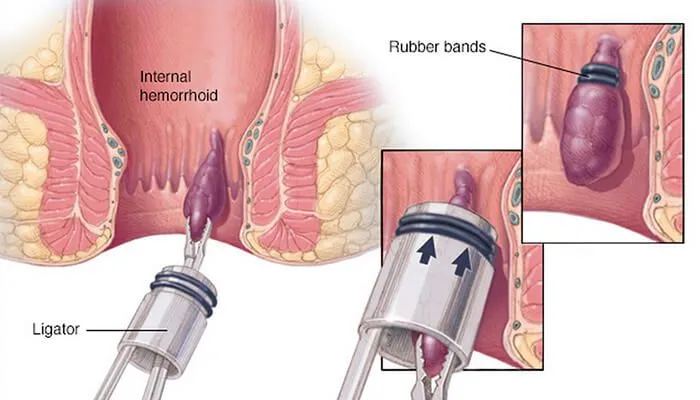
Rubber Band Ligation (RBL) is a non-surgical procedure used to treat internal hemorrhoids. During the procedure, a small rubber band is placed around the base of the hemorrhoid using a special instrument. This band cuts off the blood flow to the hemorrhoidal tissue, causing it to shrink, die, and eventually fall off in a few days. The procedure is quick, performed under local anesthesia, and is typically done on an outpatient basis.
RBL is commonly used for Grade I, Grade II, and early Grade III hemorrhoids, particularly when patients have not responded to conservative treatments such as topical medications or lifestyle changes.
When is Rubber Band Ligation (RBL) Recommended?
Rubber Band Ligation is typically recommended for patients with:
- Grade I, II, or early Grade III Hemorrhoids: Internal hemorrhoids that are not too large or prolapsed.
- Chronic Symptoms: Persistent pain, bleeding, itching, and discomfort that have not responded to conservative treatments.
- Recurrent Bleeding: Hemorrhoids that bleed frequently, causing inconvenience or concern.
- Desire for Non-Surgical Treatment: Patients who prefer a less invasive alternative to traditional hemorrhoidectomy or surgery.
How is Rubber Band Ligation Performed?
The Rubber Band Ligation procedure involves the following steps:
- Preparation: The patient is positioned on an examination table in a comfortable position, and local anesthesia is administered to numb the area.
- Insertion of Ligation Device: A small, flexible instrument called an anoscope is used to view the hemorrhoid. The doctor then uses a special tool to place a rubber band around the base of the hemorrhoid.
- Banding: Once the rubber band is placed, it tightly constricts the hemorrhoid's blood supply, causing it to shrink and dry up.
- Post-Procedure: The procedure typically takes about 10–15 minutes. Most patients can go home the same day.
Pros of Rubber Band Ligation (RBL)
- Minimally Invasive:
- RBL is a non-surgical procedure that requires no incisions, making it a less invasive treatment option compared to traditional hemorrhoidectomy.
- Outpatient Procedure:
- The procedure is typically performed in an outpatient setting, allowing patients to return home the same day without the need for a hospital stay.
- Quick and Painless:
- The procedure is usually quick and well-tolerated by most patients. The local anesthesia ensures minimal discomfort during the procedure.
- Minimal Recovery Time:
- Patients typically experience little downtime, with most able to return to normal activities within a few days, although avoiding heavy lifting or straining is advised.
- Cost-Effective:
- Rubber Band Ligation is generally less expensive than traditional surgical options like hemorrhoidectomy, making it an affordable choice for many patients.
Cons of Rubber Band Ligation (RBL)
- Risk of Complications:
- While rare, complications such as infection, severe bleeding, or prolapsed hemorrhoids (where the hemorrhoid moves past the anus) may occur. If bleeding continues, it may require further medical attention.
- Not Suitable for Advanced Hemorrhoids:
- RBL is most effective for Grade I and II hemorrhoids and early-stage Grade III hemorrhoids. For Grade IV hemorrhoids (severely prolapsed), a more invasive treatment like hemorrhoidectomy may be necessary.
- Multiple Sessions May Be Required:
- In some cases, multiple ligation treatments may be required if hemorrhoids are large or multiple hemorrhoids need treatment.
- Post-Procedure Discomfort:
- Some patients may experience discomfort, feeling a sense of fullness or mild pain in the anal region for a few days after the procedure. This can usually be managed with over-the-counter pain relievers.
- Delayed Outcome:
- The hemorrhoids do not immediately fall off after the procedure; they will typically shrink and fall off in 4–7 days, during which time some patients may experience mild discomfort or minor bleeding.
Postoperative Care and Recovery
Recovery after Rubber Band Ligation is generally quick, but patients should follow certain guidelines to ensure proper healing:
- Pain Management:
- Over-the-counter pain relievers like ibuprofen or acetaminophen can help manage discomfort after the procedure. Sitz baths can also soothe the area.
- Dietary Changes:
- A high-fiber diet is recommended to soften stools and prevent straining during bowel movements, which could put pressure on the treated hemorrhoids.
- Avoid Straining:
- It's important to avoid straining during bowel movements to ensure proper healing and prevent complications such as bleeding or recurrence.
- Monitor for Complications:
- Patients should monitor for signs of infection or excessive bleeding, such as increased pain or bleeding that lasts longer than expected. In such cases, follow-up with the doctor is necessary.
Conclusion
Rubber Band Ligation (RBL) is an effective, minimally invasive treatment for internal hemorrhoids, particularly those in the early stages. The procedure provides a quick and relatively painless solution for patients who have not found relief from conservative treatments. With its short recovery time, low cost, and high success rate, RBL is a popular choice for hemorrhoid management.
At Sukhayu Hospital, we specialize in Rubber Band Ligation (RBL) as part of our comprehensive hemorrhoid treatment options. If you're suffering from hemorrhoids and seeking a non-surgical solution, contact Sukhayu Hospital at 7420004242 for a consultation and personalized treatment plan.
Keywords