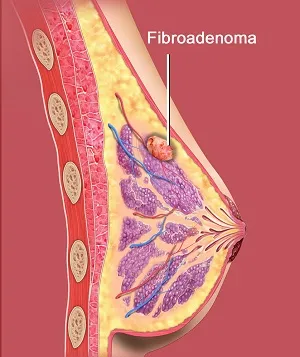
Fibroadenoma of breast
Fibroadenoma is a common benign (non-cancerous) breast tumor that occurs in young women, typically between the ages of 15 and 35. It is the most common breast tumor in this age group and is believed to result from an overgrowth of the glandular and connective tissue in the breast.
Here are some details about fibroadenoma:
1. Formation: Fibroadenomas develop from the lobules (milk-producing glands) and the stroma (supportive tissue) of the breast. They are usually solitary, but multiple fibroadenomas can occur in some cases.
2. Characteristics: Fibroadenomas are typically round or oval-shaped, smooth, and firm to touch. They can vary in size, ranging from a few millimeters to several centimeters in diameter. Larger fibroadenomas may feel like a well-defined lump in the breast.
3. Symptoms: Most fibroadenomas do not cause any symptoms and are often discovered incidentally during a breast examination or imaging tests. However, some women may experience breast pain or tenderness, especially before their menstrual period.
4. Diagnosis: To diagnose fibroadenoma, a healthcare provider may perform a clinical breast examination, followed by imaging tests such as mammography, ultrasound, or MRI. If there is uncertainty about the diagnosis, a biopsy may be recommended to confirm that the tumor is indeed a fibroadenoma and rule out any other conditions.
5. Treatment: Fibroadenomas do not usually require treatment unless they cause significant discomfort, rapidly increase in size, or raise concerns about their nature. In such cases, treatment options may include:
- Observation: Many fibroadenomas remain stable or even regress over time, so a "wait and watch" approach is often adopted, particularly in younger women.
- Fine-needle aspiration (FNA): This procedure involves using a thin needle to withdraw fluid and/or tissue from the fibroadenoma. It can be done as a diagnostic measure or for symptom relief.
- Excisional biopsy: Surgical removal of the fibroadenoma may be recommended if it is large, growing, causing symptoms, or there are concerns about its nature. The procedure is usually performed under local anesthesia.
6. Follow-up: After the removal of a fibroadenoma or if the decision is made to observe it, regular follow-up appointments and imaging tests may be scheduled to monitor any changes and ensure that the tumor remains benign.
It's important to note that although fibroadenomas are generally non-cancerous, there is a slight risk of developing breast cancer later in life. Women with fibroadenomas should continue to practice breast self-examination and undergo regular breast screenings as recommended by their healthcare provider. If there are any new changes in the breast, it's essential to seek medical attention for evaluation
For more details contact sukhayu Hospital Nashik or Contact 7420004242.
Keywords