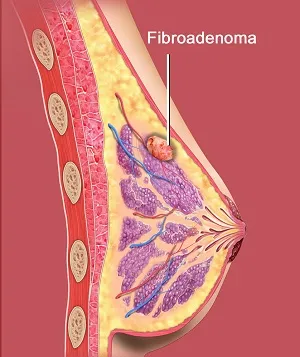
Breast Fibroadenoma
A fibroadenoma is a common, noncancerous breast lump that consists of fibrous and glandular tissues. It rarely leads to cancer and often resolves on its own.
Types of Fibroadenomas:
1. Simple Fibroadenomas:Common and smaller, posing minimal cancer risk.
2. Complex Fibroadenomas:Slightly larger, with varied cell appearances, and a slightly increased cancer risk.
3. Other Types:Giant fibroadenomas (larger than 5 cm) and juvenile fibroadenomas (rare in children and teenagers).
Prevalence:
Fibroadenomas are most common between ages 15 and 35, with up to 10% of AFAB individuals experiencing them at some point.
Symptoms and Causes:
- Solid, painless lumps in one or both breasts.
- Size can range from a pea to a golf ball.
- Tender before menstruation.
- Exact cause unknown, but estrogen sensitivity may play a role.
Risk Factors:
- More common in those menstruating.
- Uncommon after menopause.
- Slightly higher risk in Black individuals.
Complications:
While generally not life-threatening, fibroadenomas can grow, change, or become painful. Regular breast exams and mammograms aid in early detection.
Diagnosis:
- Imaging scans (mammogram, ultrasound).
- Image-guided core needle breast biopsy for tissue analysis.
Management and Treatment:
- Some fibroadenomas resolve without treatment.
- Monitoring through follow-up appointments or surgery if necessary.
- Surgical excision or cryoablation for removal.
Prevention:
- No specific prevention for fibroadenomas.
- General breast health practices include self-exams, regular check-ups, mammograms, moderate alcohol consumption, no smoking, healthy diet, regular exercise, and maintaining a healthy weight.
Outlook/Prognosis:
Most fibroadenomas do not lead to breast cancer. Regular screenings and reporting changes to healthcare providers are essential.
Living With:
- Fibroadenomas rarely increase cancer risk.
- Regular check-ups and screenings recommended.
- Contact a healthcare provider for changes in lumps, pain, or nipple issues.
When to Seek Medical Attention:
- Changes in lump size or appearance.
- Painful lumps.
- Newly discovered breast lump.
- Nipple discharge or rash.
Remember, it's crucial to consult with a doctor for personalized advice and guidance based on individual health circumstances.
For more details contact Sukhayu Hospital Nashik or call 7420004242
Keywords